

Nobody plans for a car problem. The brakes start squeaking, the engine makes an unusual noise, or the car suddenly refuses to start.
When drivers in Canada need a repair, they usually search online first for a nearby shop that can help. Searches such as “brake repair near me” or “engine diagnostics in Mississauga” can quickly turn into phone calls and bookings.
For auto repair businesses, visibility in those searches can directly affect how many local customers find your shop. Search Engine Optimization (SEO) for auto repair shops helps your business appear when drivers are actively looking for the services you provide, rather than relying only on referrals, walk-ins, or paid ads.
As Google’s mission is to “organize the world’s information,” your website needs to clearly communicate what your shop offers, where you operate, and why customers should consider your services in Canada. A strong SEO strategy connects those details with relevant local searches.
For businesses ready to turn online searches into more opportunities, an auto repair shop SEO agency in Canada like Potens Digital can build an SEO strategy around your services, locations, and customers. The goal is simple: help the right drivers find your shop when they need it.
What Makes SEO Work for an Auto Repair Shop?
- Keep your business information consistent: Use the same business name, address, phone number, hours, and branding across your website, Google Business Profile, directories, and social profiles.
- Fully optimize your Google Business Profile: Choose the most relevant primary category, list your actual services, keep hours updated, add a booking link, publish useful updates, and encourage genuine customer reviews.
- Target the services customers actually search for: Build focused pages and keyword groups around services such as brake repair, oil changes, tire repair, engine repair, transmission repair, battery replacement, and vehicle diagnostics, combined with the cities or areas you serve.
- Make your website fast and easy to use: Prioritize mobile-friendly design, quick-loading pages, compressed images, descriptive image file names, accurate alt text, and simple navigation.
- Show why customers can trust your shop: Highlight technician certifications, years of experience, relevant training, warranties where applicable, and other verifiable credentials. Use accurate AutoRepair or LocalBusiness structured data to help search engines understand your business.
- Answer customer questions clearly: Put the most useful answer first, then provide supporting details. Clear, well-structured content can help your pages serve both traditional search results and AI-powered search experiences.
- Turn search visibility into enquiries: Make it easy for visitors to contact your shop with click-to-call buttons, online booking, quote forms, and clear calls to action throughout the website.
- Be ready when the phone rings: SEO can bring a driver to your business, but your response, availability, and customer service help turn that search into an actual appointment.
Our Industry-Specific SEO Guides
Explore our SEO guides for other local service businesses:
- SEO Guide for Plumbers
- SEO Guide for Construction Companies
- SEO Guide for Glass Companies
- SEO Guide for Real Estate Agencies
What Is SEO for Auto Repair Shops?
SEO for auto repair shops is the process of improving a business’s online presence so search engines can understand its services, location, and relevance to potential customers. It covers your website, Google Business Profile, local listings, service pages, reviews, and other factors that can affect your visibility in search results.
For an auto repair business, relevance starts with the services customers actually need. A driver searching for brake repair needs different information from someone looking for tire service or engine diagnostics. Your website should clearly list those services and provide practical details such as service areas, hours, contact information, and booking options.
A practical SEO strategy usually covers four areas:
- Local SEO: Accurate business information, Google Business Profile optimization, local listings, service areas, and customer reviews.
- Content and on-page SEO: Dedicated service pages, relevant search terms, useful FAQs, clear headings, and helpful information.
- Technical SEO: Mobile usability, page speed, crawlability, indexing, internal links, and a logical site structure.
- Authority and trust: Genuine reviews, relevant local mentions, industry credentials, and useful content that supports your shop’s credibility.
The reason this matters is simple: drivers in Canada often search online before deciding where to take their vehicle. Google reported that 76% of people who searched on their smartphone for something nearby visited a business within a day. For an auto repair shop, that creates an opportunity to connect online visibility with real-world visits.
When your business appears for relevant searches, provides the information drivers need, and makes it easy to contact the shop, SEO becomes part of the customer journey rather than just a traffic strategy. A driver can discover your shop, check your services and reviews, and move directly to a call or booking.
Why Does SEO Matter for Auto Repair Businesses?
Stop paying for ads, and what happens?
The phone goes quiet.
Paid campaigns work while the budget is running. Word of mouth is valuable, but it only reaches people who already know someone who knows you.
SEO for automotive repair shops works differently. Once your shop consistently shows up for “brake repair near me” or “car diagnostics in Brampton,” your website and Google Business Profile keep working without a per-click bill.
| Growth Factor | Google Ads (PPC) | SEO for Auto Repair Shops |
| Speed | Fast, as soon as campaigns launch. | Slower to build, then compounds over time. |
| Cost Over Time | You pay per click for as long as you advertise. | Ongoing investment, but no per-click fee on organic traffic. |
| Local Visibility | Paid placements at the top of results. | Organic results plus the local Map Pack. |
| Search Coverage | Limited to what you are willing to bid on. | Can cover brakes, tires, batteries, engines, and more. |
| Long-Term Value | Traffic drops the moment you stop paying. | Strong pages and profiles keep pulling traffic. |
| Customer Trust | Some users recognize paid results as ads. | Organic rankings and reviews tend to read as more credible. |
Paid advertising and SEO can serve different roles in an auto repair marketing strategy. Ads can promote a specific service, seasonal offer, or location and bring immediate visibility, while SEO builds organic search presence around the services customers regularly need. Using both can give a shop more ways to reach potential customers at different stages of the search process.
For shops that want to build their organic visibility, Potens Digital is an automotive digital marketing agency in Canada that helps auto repair businesses improve their presence across search, local listings, and other digital channels. The strategy can be built around the shop’s services, locations, and the types of searches that matter to its customers.
How to Do Keyword Research for Auto Repair Shops
Start with the searches your customers actually use when they need automotive help. A broad term like “car repair” doesn’t tell you what the person needs. Compare that with “brake repair near me,” “oil change services in Sudbury,” or “winter tire change in Calgary.” These searches reveal a specific service and, in many cases, a clear intention to contact a shop.
Now, look at the example below:
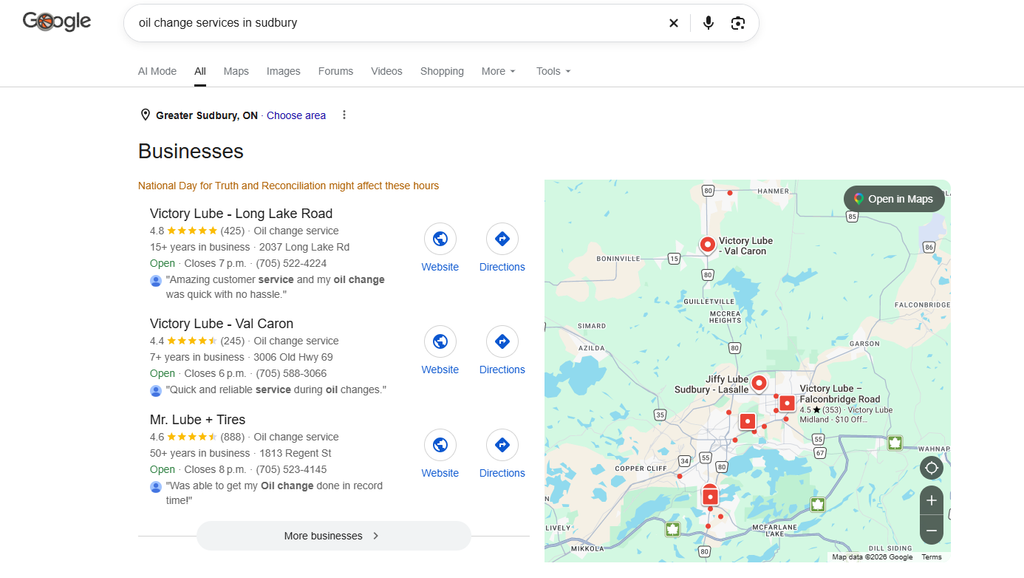
As a trusted SEO agency in Canada and the USA, Potens Digital targeted authentic keywords like “oil change services in Sudbury” for Victory Lube. This strategy propelled our client straight to the top of Google’s SERPs, securing dominant #1 and #2 spots in the local map pack.
| We Know That You Got It Now! Good keyword research separates informational queries from location-based searches. Informational queries may help someone learn about a vehicle problem, while service and location-based searches often indicate that the person is looking for a business. |
Your keyword strategy should account for both, prioritizing terms that closely match the services your shop provides.
You do not need hundreds of loosely related keywords. Focus on relevant searches for your core services, service areas, and common customer questions. Group closely related terms together, then use those groups to create focused service pages, location pages, blog content, and FAQs that match what people are actually looking for.
Start With Search Intent
Ask one question before picking a keyword: what does this person actually want?
- Transactional intent. The driver is ready to act. Look for words like “repair,” “replacement,” “near me,” “cost,” “quote,” or “book.” Prioritize these.
- Informational intent. The driver is researching a symptom or service, such as “why is my car shaking when braking.” Build trust here before they are ready to book.
- Local intent. The driver wants a shop in a specific place, such as “auto repair shop in Etobicoke.” For a local business, this is often the most valuable intent.
Turn Keywords Into Pages
| Keyword Example | Intent | Target Page |
| emergency brake repair near me | Transactional, urgent | Brake Repair service page |
| how often should I change my oil | Informational | Blog: oil change guide |
| synthetic vs. conventional oil | Comparison | Blog: oil comparison guide |
| oil change in Vaughan | Local, transactional | Vaughan location page |
| Honda brake repair | Transactional, brand specific | Honda brake repair page |
| is it safe to drive with check engine light on | Informational, urgent | Blog plus Diagnostics page |
Build Keyword Clusters Around Your Core Services
1. Urgent and Breakdown Repairs
When something breaks, drivers want to know who can help and how fast.
- emergency brake repair near me
- car won’t start battery replacement
- same day car repair
- check engine light diagnostics near me
- mobile mechanic near me (only if you offer it)
Build a page for each one. State what you fix, where you serve, and how fast someone can book.
2. Routine Maintenance and Vehicle Maintenance
These searches are less urgent, but they bring repeat customers, and repeat customers drive real revenue.
- oil change near me
- full synthetic oil change
- winter tire changeover
- brake inspection
- vehicle maintenance schedule
Canadian seasons are an advantage here. Drivers search for winter tire swaps, pre-winter inspections, and battery checks on a predictable annual schedule. Publish this content before the rush, not during it.
3. Major Repairs and Diagnostics
Major repairs and diagnostic services often involve more questions before a customer contacts a shop. They may want to understand the possible issue, what the service involves, and whether the shop handles that type of repair.
Relevant searches can include:
- engine repair shop near me
- transmission repair
- transmission fluid service
- vehicle diagnostics near me
- suspension and steering repair
Create service pages that explain the common signs of a problem, the type of diagnostic or repair work involved, and what customers can expect when they contact your shop. Keep the information practical and specific to the services your technicians provide.
4. Vehicle-Specific and Specialty Services
Some customers search for a repair shop by vehicle type, make, or a particular specialty. These searches can be useful when your technicians in Canada regularly work with the vehicles or systems involved.
Examples include:
- hybrid and electric vehicle service
- European car repair
- diesel truck repair
- fleet maintenance for small businesses
- Victory Lube brake repair
- Victory Lube transmission service
Only create vehicle-specific or specialty pages that reflect your actual services and experience. Clear, accurate information helps customers decide whether your shop can work on their vehicle.
5. Geographic Keywords
Location-based keywords connect your services with the communities you serve. Combine relevant service terms with your actual service areas, neighbourhoods, or cities.
Examples include:
- auto repair shop in Calgary
- brake repair Mississauga
- oil change Vaughan
- tire repair Brampton
- automotive repair shop in Toronto
Use geographic terms naturally on relevant pages rather than creating multiple pages with nearly identical content. Your website, Google Business Profile, and other business information should accurately reflect where your shop operates and which customers you serve.
Optimize Your Google Business Profile for Auto Repair Shops
For most drivers, your Google Business Profile is the first thing they see. Before your website even loads, they have already checked your name, rating, hours, and phone number. Get this right, and you turn local searches into calls, directions requests, and bookings.
Choose the Right Primary Category
Pick the category that best describes your core business, such as Auto repair shop or Mechanic, depending on your market.
Add secondary categories only if they describe services you actually provide, such as Brake shop, Oil change service, Tire shop, or Transmission repair service.
Do not pad the list to chase extra searches. Relevance beats volume.
Keep Your Business Information Accurate
Use the same name, address, phone number, website, and hours everywhere: your GBP, your website, and every directory.
Hours deserve real attention. A driver who arrives at a shop that Google listed as open but finds closed will not come back. Update holiday and seasonal hours before they change.
Add your booking link so drivers can book directly from your profile. Use real photos of your bays, team, equipment, finished work, and storefront. A clean, professional shop earns trust before anyone calls.
Turn Your Service List Into a Sales Opportunity
A vague description tells drivers nothing. Spell out what you do:
- Brake Repair and Brake Pad Replacement
- Full Synthetic Oil Change
- Vehicle Diagnostics and Check Engine Light Service
- Engine Repair
- Transmission Repair and Fluid Service
- Battery Testing and Battery Replacement
- Tire Repair, Rotation, and Seasonal Tire Changeover
Use the Full Profile, Not Just the Basics
Most shops stop at photos and hours. A few features most competitors skip:
- Q&A section. Seed it with the questions you hear most, such as whether you service a specific brand or offer loaner vehicles.
- Short videos. A shop walkthrough or a technician explaining a common repair builds more trust than photos alone.
- Messaging, where it is available, so your team can respond directly from the profile.
- Products or offers. List seasonal promotions, such as a winter inspection package, if your profile supports it.
Keep Your Profile Active
Tip to Remember: You must post regularly!
Share seasonal reminders, new services, and useful tips, such as signs your brakes need attention or why batteries struggle in the cold.
A post about a winter readiness inspection promotes the service you want to sell and shows drivers your shop is active.
Turn Reviews Into Local Trust
Reviews often decide whether a driver calls you or moves to the next shop. Ask genuine customers for feedback and respond professionally. Detailed reviews help most. A review mentioning a fair diagnostic, a clear explanation, or a same-day brake job gives the next customer real context.
Your GBP gets you noticed. Your website closes the deal. Make sure they support each other.
Local SEO and Map Pack Visibility Matter for Auto Repair Shops in Canada
A strong Google Business Profile gives your shop a solid starting point, but local visibility does not depend on your profile alone. Search engines also look at how your business is represented across your website and other relevant local sources. The goal is to build a consistent connection between your shop, its services, and the communities it serves.
Google considers relevance, distance, and prominence when determining which businesses appear in local search results. Relevance looks at how closely a business matches the search. Distance considers how close the business is to the search location, while prominence reflects how established and recognized the business is online, including signals such as reviews, links, and mentions.
For auto repair businesses, focus on the local SEO areas that extend beyond your Google Business Profile:
#1. Create Useful Location Pages
If your shop serves multiple communities, create location pages that provide genuinely useful information for each area.
Explain which services you provide there, how customers can reach your shop, and any relevant details about the area. Each page should offer something useful, not just replace one city name with another.
See below how Victory Lube creates separate pages for different locations:
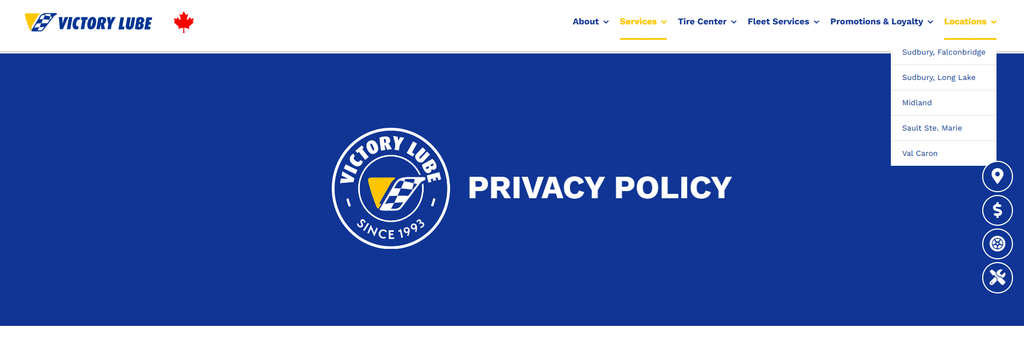
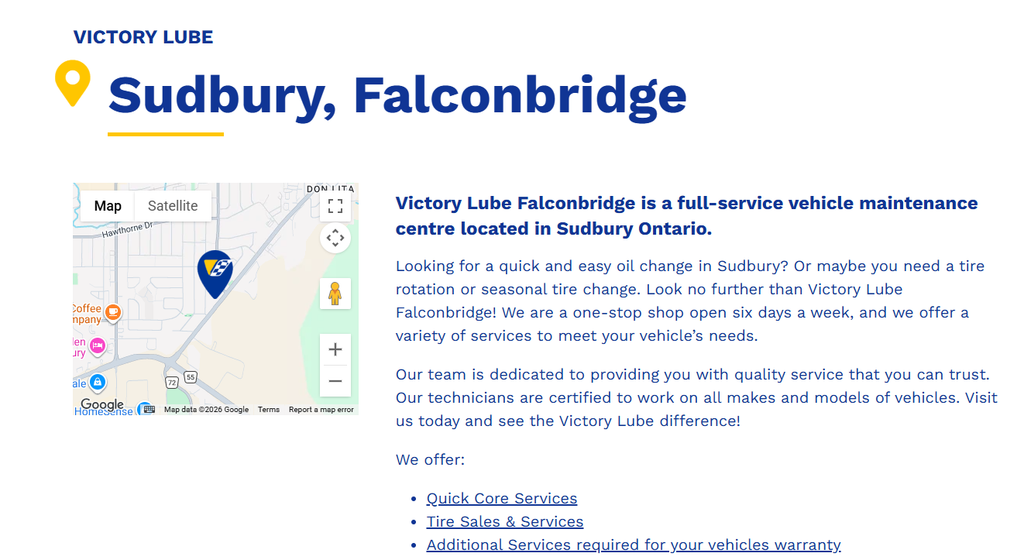
Here’s how Potens Digital has also created clear, informative location pages for Victory Lube, giving drivers the local details they need when searching for services in Sudbury:
#2. Strengthen Local Citations
Make sure your business is listed accurately on relevant automotive directories, local business directories, industry websites, and other legitimate platforms. Consistent information helps reinforce your business details across the web.
#3. Build Relevant Local Links
Links from local organizations, automotive associations, community websites, suppliers, sponsorships, and other relevant sources can help connect your business with its community. Focus on genuine relationships rather than collecting links from unrelated websites.
#4. Match Content to Local Search Intent
Your website should reflect the questions and services that matter to customers in your service area. A page about winter tire changeover may be especially relevant for a Canadian shop, while other services may matter more at different times of year.
#5. Keep Your Service Areas Realistic
Target only the communities your shop actually serves. Accurate service-area information can help your business appear in Google’s Map Pack for relevant local searches, such as “auto repair shop near me,” “brake repair in Mississauga,” and “vehicle diagnostics in Calgary.” This helps nearby customers find your shop when they need automotive services.
How to Master On-Page SEO for Auto Repair Websites
Getting someone to your site is only half the job. Once they land, the page has to answer two questions fast:
What do you fix, and where?
Strong on-page SEO helps search engines understand your services while giving customers what they need to act. Every service page needs a clear focus, useful content, relevant keywords, and an easy way to contact you.
(Add a screenshot of a well-optimized service page here, with a “Source” caption.)
Key On-Page SEO Elements
Title Tags
Include the main service and, where relevant, the location.
Example: Brake Repair in Mississauga | [Shop Name]
Meta Descriptions
Say what the page offers and give searchers a reason to click.
Example: Need brake repair in Mississauga? Our certified technicians handle inspections, pad and rotor replacement, and honest recommendations. Book today.
Header Hierarchy
Organize the page around what customers actually want to know.
Example:
- H1: Brake Repair in Mississauga
- H2: Signs You Need Brake Service
- H2: Our Brake Inspection and Repair Process
- H2: Brake Pads, Rotors, and Fluid Service
- H2: Frequently Asked Questions
Keyword Placement
Use keywords where they genuinely help explain the page. Work the main service, related terms, and location into headings and body copy naturally, instead of repeating one phrase over and over.
Related Terms and Entities
Cover the topics that belong together. A brake page should mention pads, rotors, and fluid. A diagnostics page should mention the check engine light and the scan process. This depth shows search engines your page covers the subject fully.
Internal Linking
Connect related services. A brake repair page can link to vehicle diagnostics. An oil change page can link to tire and maintenance services.

Your Digital Growth Partner
Get More Value From Your Service Pages
Make your auto repair services easier to find and understand. Potens Digital can optimize your titles, headings, content, internal links, and other on-page elements to target valuable local searches.

Optimize Service Pages for Auto Repair Shops in Canada
One page listing every service cannot rank for anything specific, and it gives customers little reason to stay. If you offer brake repair, oil changes, tire services, engine repair, transmission repair, and battery replacement, each one needs its own page.
A dedicated page targets specific searches, answers real questions, builds trust, and drives visitors to book.
Recommended Website Architecture
Homepage
Introduce your shop, core services, service areas, and the strongest reasons to choose you.
Maintenance Services Hub
- Oil Change and Fluid Services
- Tire Rotation, Tire Repair, and Seasonal Changeover
- Battery Testing and Battery Replacement
- Multi-Point Vehicle Inspections
Repair Services Hub
- Brake Repair
- Engine Repair
- Transmission Repair
- Suspension and Steering Repair
- Vehicle Diagnostics and Check Engine Light Service
Vehicle-Specific Hub (if applicable)
- Service pages by brand or vehicle type your team specializes in
This structure gives visitors a clear path from broad categories to specific services, and gives each service its own chance to rank.
What a High-Performing Service Page Includes
| Section | What to Include | Why It Matters |
| Header & Navigation | Clear navigation, phone number, and booking option. | Helps visitors contact your shop quickly. |
| Hero Section | Service name, location, relevant image, and clear CTA. | Immediately tells visitors what you offer and where. |
| Service Overview | What the service involves, common signs, and what your technicians handle. | Gives customers the information they need before contacting you. |
| Service Details | Diagnostic steps, repair options, parts used, and vehicle types or makes served. | Helps customers understand what to expect. |
| Pricing Information | Starting prices, estimated ranges, or factors that affect the final cost. | Addresses cost concerns before the customer calls. |
| Trust Signals | Technician qualifications, certifications, guarantees, reviews, and genuine photos. | Helps customers feel more comfortable choosing your shop. |
| Booking or Quote Form | Simple fields for vehicle details, service needed, and contact information. | Makes it easy to request an appointment or quote. |
| FAQs | Clear answers to common questions about the service, cost, timing, and process. | Addresses common concerns and supports relevant search queries. |
Do not just repeat keywords …
Answer the question, prove your expertise, and make booking easy.
Content Marketing Strategy for Auto Repair Shops
Drivers often search for answers before they search for a repair shop. They may ask, “Why is my check engine light on?” “Is this brake noise serious?” or “How much will this repair cost?”
Answering these questions helps your shop reach potential customers earlier in their search.
Build a Content Funnel That Drives Bookings
Top of Funnel: Informational Searches
Target drivers researching a problem or asking a basic question.
- Why Is My Check Engine Light On?
- How Long Can You Drive on a Flat Tire?
- How Often Should You Change Your Oil?
- How Does Cold Weather Affect Your Car Battery?
Middle of Funnel: Evaluation Searches
Help drivers compare options and understand what they may need.
- Synthetic vs. Conventional Oil
- Repair vs. Transmission Replacement
- Winter Tires vs. All-Season Tires
- Tire Installation VS. Tire Mounting
Bottom of Funnel: Service Searches
Target drivers who are ready to contact a shop.
- Brake Repair in Mississauga
- Vehicle Diagnostics in Toronto
- Battery Replacement in Calgary
- Best Places to Buy Tires in Sudbury, Ontario
Check the example below:
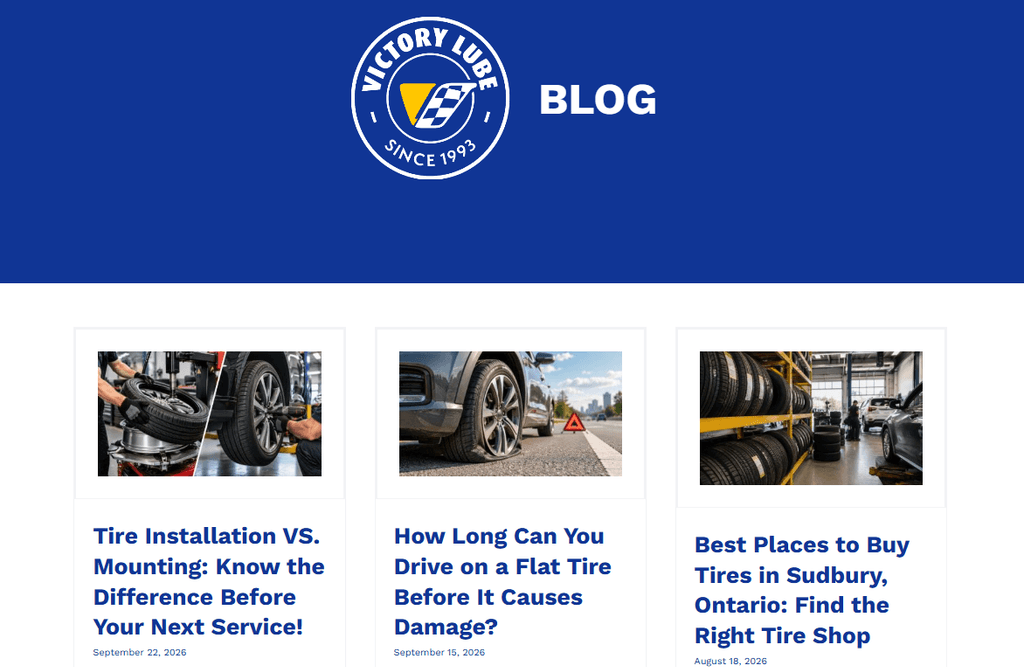
| Link these searches to relevant service pages, location pages, and booking options. |
Create Seasonal Content
Publish content before seasonal demand increases:
- Fall: Winter tire changes, inspections, battery testing
- Winter: Cold-start issues, batteries, brakes, fluids
- Spring: Tire changes, alignment, suspension checks
- Summer: AC service, cooling systems, road-trip inspections
Answer Questions Directly
Start each section with a clear answer, then provide supporting details. Have a qualified technician in Canada review safety-related advice before publishing.
Content Publishing Guidelines
- Answer real questions: Use topics your technicians and service advisors hear regularly.
- Lead with the answer: Give the key information first.
- Use plain language: Write for drivers, not mechanics.
- Prioritize accuracy: Have qualified professionals review safety-related content.
- Maintain quality: Publish consistently without sacrificing usefulness.
- Link to services: Connect relevant content to service, location, contact, and booking pages.
Create Content That Drives More Bookings
Answer the questions drivers are already searching for. Potens Digital creates SEO-focused content around customer intent, services, locations, and buying stages to help auto repair businesses build organic visibility.
Internal Linking Architecture for Auto Repair Websites in Canada
Internal links help visitors move between related pages and help search engines understand your website structure.
- Link informational content to services: A post about worn brake pads can link to your brake repair page.
- Use descriptive anchor text: Use phrases such as “brake repair services” or “vehicle diagnostics” instead of “click here.”
- Connect related services: Link relevant pages, such as battery service to diagnostics or oil changes to tire services.
- Prioritize important pages: Keep key service and location pages easy to reach through navigation and relevant content.
- Add links where they help: Every internal link should give the reader a useful next step.
Technical SEO and Image Optimization for Auto Repair Shops
Your website needs to work well on phones, load efficiently, and remain easy for search engines to access.
- Optimize for mobile: Make phone numbers, forms, menus, and booking options easy to use on smaller screens.
- Improve page speed: Compress large files, reduce unnecessary scripts, and monitor performance with tools such as Google Search Console and PageSpeed Insights.
- Check crawlability: Maintain an XML sitemap, fix broken links, use HTTPS, and make sure important pages are accessible to search engines.
- Optimize images: Resize images appropriately and use modern formats such as WebP where suitable.
- Use descriptive file names and alt text: Describe what the image actually shows rather than adding keywords for SEO.
- Keep images clear: Compress files without making shop, vehicle, or repair photos difficult to see.
| Good technical SEO removes barriers that can make your website harder to use or understand. |
Reviews for Auto Repair Shops in Canada & the USA
Reviews can influence whether a driver feels comfortable contacting an auto repair shop, especially when choosing between local businesses.
- Ask after completed service: Request feedback when the customer’s experience is still fresh.
- Make reviews easy to leave: Provide a direct link to your review profile.
- Respond professionally: Thank customers for positive feedback and address concerns respectfully.
- Handle negative reviews carefully: Acknowledge the issue and move detailed discussions offline when appropriate.
- Use genuine reviews: Never create fake reviews or offer incentives for positive feedback.
- Show relevant feedback: Where appropriate, feature genuine customer reviews on service or location pages.
Establishing E-E-A-T for Auto Repair Shops in Canada
E-E-A-T stands for Experience, Expertise, Authoritativeness, and Trustworthiness. For auto repair businesses, demonstrate these qualities through real information about your team, services, qualifications, and work.
| E-E-A-T Pillar | How to Demonstrate It |
| Experience | Show real repair work, shop photos, completed projects, and technician experience. |
| Expertise | Provide accurate service information and list relevant training or certifications. |
| Authoritativeness | Highlight relevant industry memberships, manufacturer affiliations, and community involvement. |
| Trustworthiness | Make pricing information, policies, contact details, reviews, and business information easy to verify. |
Schema Markup for Auto Repair Shops
Schema markup provides search engines with structured information about your business and webpages. Relevant Schema.org types may include AutoRepair, LocalBusiness, Organization, Service, and BreadcrumbList, depending on the page.
Keep your structured data accurate and consistent with information visible on the website. Schema markup does not guarantee higher rankings or enhanced search results, but accurate implementation can help search engines understand your content.
Preparing Your Auto Repair Website for Voice Search and AI Search
Drivers may search using complete questions such as:
- Where can I get a brake inspection near me?
- How much does a battery replacement cost?
- Is it safe to drive with the check engine light on?
Make these questions easy to answer on your website:
- Use clear, question-based headings.
- Give a direct answer before adding more detail.
- Explain technical terms in plain language.
- Use short paragraphs, lists, and tables where helpful.
- Include specific and accurate information.
- Identify the author or reviewer, especially for safety-related content.
- Keep business information consistent across trusted sources.
- Update information when services, pricing, or seasonal advice changes.
Clear, well-structured answers make your content easier for both customers and search systems to understand.
Local Citations and Directory Listings
Local citations are online mentions of your business information, such as your name, address, and phone number. Accurate listings make it easier for customers to find and verify your shop.
- Audit existing listings: Correct outdated, duplicate, or inaccurate information.
- Prioritize major platforms: Keep Google Business Profile, Apple Maps, Bing Places, and relevant directories accurate.
- Use relevant Canadian directories: Consider platforms relevant to your market and automotive industry.
- Update changes promptly: Update your listings when your address, phone number, website, or hours change.
- Avoid low-quality directories: Focus on legitimate platforms that customers and search engines can trust.
Local Link Building for Auto Repair Shops in Canada
Focus on earning links from organizations and businesses that have a genuine connection to your shop or community.
- Local sponsorships: Support relevant sports teams, schools, or community events.
- Business associations: Join relevant chambers of commerce, BIAs, or local organizations.
- Suppliers and manufacturers: Seek relevant listings where you qualify.
- Local media: Provide useful automotive insights for local news coverage.
- Industry associations: Participate in relevant automotive organizations and networks.
The goal is to earn relevant links through real relationships, not by collecting links from unrelated websites.
How to Do Competitor Analysis for Auto Repair Shops in Canada
Competitor research can show which services, locations, and topics are receiving search visibility in your market.
- Review local search results: Search for your main services and locations.
- Find keyword gaps: Identify relevant searches competitors target that your website does not.
- Compare service pages: See how competitors explain services and guide visitors to contact their business in Mississauga, Sudbury or Vaughan.
- Identify content gaps: Find useful questions or topics that competitors have not covered well.
- Review local visibility: Compare relevant local listings and search presence.
Use these findings to identify opportunities for your own website rather than copying competitor content.
8 Common SEO Mistakes Auto Repair Shops Make
- Putting every service on one page: Create dedicated pages for major services.
- Creating duplicate location pages: Each location page should provide genuinely useful, location-specific information.
- Using generic or irrelevant images: Use real photos that accurately represent your shop and services.
- Publishing unreviewed safety advice: Have qualified professionals review content involving brakes, tires, steering, or other safety-related systems.
- Inconsistent business information: Keep important business details accurate across listings.
- Focusing only on rankings: Track calls, bookings, forms, and other meaningful conversions.
- Buying links or fake reviews: Focus on genuine relationships and customer feedback.
- Ignoring incoming leads: Handle calls and enquiries promptly.
Tracking SEO Performance for Auto Repair Shops
Track actions that show whether SEO is contributing to real business enquiries.
- Google Analytics 4: Monitor organic traffic, landing pages, and key website actions.
- Google Search Console: Review search queries, impressions, clicks, indexing, and page performance.
- Call tracking: Measure calls generated through organic search and specific landing pages.
- Form and booking tracking: Monitor appointment requests and quote submissions.
- Google Business Profile insights: Review available calls, website visits, and direction requests.
- CRM or shop management data: Where possible, connect enquiries with booked jobs and completed repairs.
How Long Does Auto Repair Shop SEO Take to Show Results?
There is no fixed timeline for SEO. Results can vary based on the market, competition, website condition, service area, existing authority, and scope of work.
A typical campaign may progress through these stages:
- Months 1–2: Audit the website, technical SEO, local presence, and existing content.
- Months 3–4: Improve core service and location pages, internal links, metadata, images, and mobile experience.
- Months 5–6: Expand relevant service and location content and strengthen local authority.
- Months 7–12+: Use performance data to improve existing pages, identify new opportunities, and continue building useful content.
These are planning stages, not guaranteed result dates.
How Much Does SEO for Auto Repair Shops Cost in Canada?
SEO costs vary based on the shop’s location, number of locations, services, competition, website condition, content requirements, and level of ongoing support. When comparing auto repair shop SEO services, look at what the plan actually includes:
- Technical SEO
- Keyword research
- Service page optimization
- Local SEO
- Location pages
- Content creation
- Internal linking
- Citation management
- Link building
- Conversion tracking
- Reporting
- Ongoing optimization
The most useful comparison is between the work included and the opportunities being targeted, rather than price alone.
The Ultimate Auto Repair Shop SEO Checklist
- Verify business name, address, phone number, website, and hours.
- Claim and verify your Google Business Profile.
- Create dedicated pages for major services.
- Create useful location pages for areas you actually serve.
- Optimize titles, headings, URLs, and internal links.
- Publish helpful service, seasonal, and informational content.
- Optimize images and mobile performance.
- Collect genuine reviews and respond professionally.
- Maintain accurate local citations.
- Earn relevant local and industry links.
- Implement accurate structured data.
- Track organic traffic, calls, forms, and bookings.
- Review performance and update your strategy regularly.
Frequently Asked Questions About Auto Repair Shop SEO
What is auto repair shop SEO?
It is the process of improving your website and online presence so your shop can appear for relevant searches such as brake repair, oil changes, and vehicle diagnostics.
How does local SEO help an auto repair shop?
It helps connect your business with customers searching for automotive services in the areas you serve.
Can I do SEO for my auto repair shop myself?
You can manage basic tasks such as updating your business profile, requesting genuine reviews, and publishing useful content. Technical SEO, structured data, competitor research, and link building may require specialist support.
What is the difference between primary and secondary GBP categories?
Your primary category should describe your main business activity. Secondary categories can describe other services your shop actually provides.
How often should I audit my auto repair website?
Review your website regularly for broken links, outdated information, technical issues, and pages that are no longer performing well.
How is SEO different from Google Ads?
Google Ads provides paid search visibility, while SEO focuses on improving organic visibility. Businesses may use both depending on their goals.
Does SEO help with AI Overviews?
No approach guarantees inclusion. However, clear answers, accurate information, relevant expertise, and consistent business details can make content easier for search systems to understand.
How to Choose an Auto Repair Shop SEO Agency
Look for an agency that can clearly explain its approach and how the work relates to your business.
- Relevant experience: Understands local service businesses and automotive search behaviour.
- Clear strategy: Can explain which services, locations, and search opportunities it plans to target.
- Realistic expectations: Avoids guarantees of instant rankings or guaranteed Map Pack positions.
- Transparent reporting: Reports on meaningful metrics such as visibility, calls, enquiries, and bookings.
- Business-focused approach: Connects SEO activity to the actions that matter to your shop.
Get Started With Auto Repair Shop SEO Services
Potens Digital creates complete SEO strategies for auto repair shops that want to be found when drivers search for the services they provide. We start by understanding your business, services, locations, target customers, website, and search demand. From there, we build an SEO strategy that brings together technical SEO, keyword research, content, on-page optimization, local search, authority building, and conversion-focused improvements.
Our approach covers the full SEO process, including technical website optimization, service page optimization, location pages, keyword targeting, content creation, internal linking, Google Business Profile optimization, local citations, relevant link building, and ongoing performance analysis. We do not treat these as separate tasks. We connect each part of the strategy, so your website can target valuable searches, build stronger relevance around your services, and provide a better experience for people looking for an auto repair shop.
Whether you provide general auto repair, brake service, oil changes, tire services, diagnostics, or specialized automotive repairs, contact Potens Digital and see us build your SEO strategy around the searches that can drive business. We identify opportunities, optimize your website and search presence, strengthen your visibility across relevant results, and continually refine the strategy based on performance. We focus on building sustainable organic visibility that brings more qualified visitors, calls, enquiries, and bookings to your shop.

