



You Found an Agency. Now, How Do You Know If They’re Actually Delivering Results?
So, you did it. You went through all the searching for a “digital marketing agency near me,” sat through the presentations, and finally signed the contract. The first invoice is paid, and the kickoff meetings are done. Now what?
If you’re feeling a little knot in your stomach, you’re not alone. A big question starts to creep in: “Is this actually working?” You’re spending good money, but it’s hard to tell if it’s leading to real growth or just getting lost. This uncertainty is a huge deal, especially when you hear that almost half of businesses that fire their agencies do it because they are not happy with the results they see. It is not a good feeling when you think your marketing dollars are not bringing a good return on your investment.
This guide is here to help. We’re going to walk through a clear, simple way to measure your agency’s performance. No confusing jargon, just the key things you need to track to see how your marketing is working. Let’s make sure your investment helps build a strong partnership that really grows your business.
Step 1: The Foundation – Setting Clear Goals and KPIs
Okay, before you even look at a single report, we have to talk about the most important first step. The foundation. Without it, everything else will crumble. You and your agency need to be on the exact same page about what “success” actually looks like.
First, let’s clear something up. There’s a big difference between your main business goals and your marketing Key Performance Indicators, or KPIs.
Your business goal is the big picture. Think: “I want to increase my company’s total revenue by 20% this year.”
Your marketing KPIs are the specific, measurable steps your agency will take to help you get there. For example: “To hit that revenue goal, we need to generate 150 qualified leads per month through the website.” See the difference? One is the destination; the other is the turn-by-turn direction on the map.
The best way to set these marketing goals is using the SMART framework. It’s a simple checklist to make sure your goals are solid.
- Specific: What exactly do you want to achieve?
- Measurable: How will you track progress?
- Achievable: Is this realistic with your budget and timeline?
- Relevant: Does this goal actually help your main business goal?
- Time-bound: When does this need to be done?
So, a vague goal like “get more leads” becomes a SMART goal: “Increase marketing qualified leads from organic search by 25% within the next six months.” Now everyone knows what they’re working toward.
This isn’t just busywork. It’s about building a real partnership. A good agency relationship isn’t just transactional; it’s built on a “mutual understanding of the goals and mutual agreement that we’re moving in the same direction,” as one expert puts it. This principle underlies why collaborative partnerships drive better outcomes.
Plus, it just works. Marketers who actually write down their goals are nearly four times more likely to report success. Without this clear agreement from day one, you can’t fairly evaluate digital marketing agency performance. It’s all just guesswork.
Step 2: Decoding the Agency Report – Which Metrics Actually Matter?
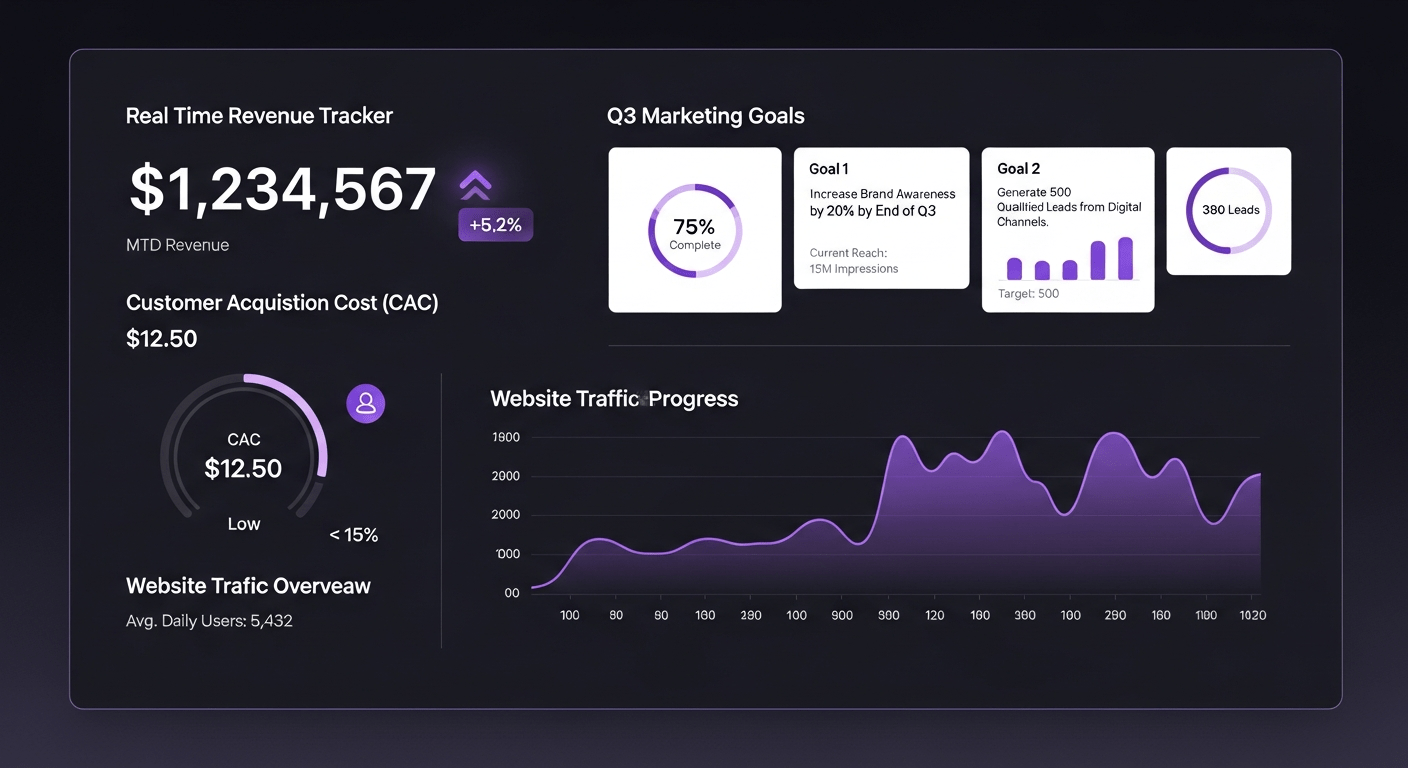
That monthly report just landed in your inbox. It’s probably a big PDF, packed with charts and graphs that all seem to be pointing up. It looks impressive. But here’s the million-dollar question: what does any of it actually mean for your business?
It’s easy to get lost in a sea of numbers. That’s why we need to talk about the difference between metrics that make you feel good and metrics that actually make you money. Think of them as vanity metrics versus action metrics.
Vanity metrics are like cotton candy. They look big and fluffy, but there’s not much substance. They are numbers like:
- Impressions or Reach: How many people saw your ad or post? It’s nice, but did they do anything?
- Likes and Followers: A big follower count looks great, but it doesn’t pay the bills.
- Total Website Traffic: More visitors are good, right? Maybe. But if they all leave after two seconds without buying anything, it’s just empty traffic.
Action metrics, on the other hand, are the ones tied directly to your bottom line. These are the numbers that show if your marketing is working. They include:
- Conversion Rate: What percentage of people took the action you wanted? Like filling out a form or buying a product.
- Cost Per Lead (CPL): How much did it cost you to get one new potential customer? This helps you see if your ad spend is efficient.
- Return on Ad Spend (ROAS): For every dollar you spend on ads, how many dollars are you getting back? This is a huge one for PPC performance metrics.
- Customer Lifetime Value (CLV): How much is a new customer worth to your business over time?
Focusing on these action metrics is a big deal. In fact, companies that use data-driven approaches are six times more likely to be profitable year-over-year. It’s not just about getting reports; it’s about getting the right information in those reports. These are the numbers that help with the all-important task of calculating your marketing ROI.
Another way to think about this is leading versus lagging indicators. Leading indicators are the early signs that things are moving in the right direction. Think of a metric like organic traffic growth or better keyword rankings. These don’t immediately equal sales, but they show the strategy is taking effect. The lagging indicators are the results you can take to the bank, like new sales and revenue. A good report shows how the leading indicators are causing the lagging ones to improve. A great agency will connect those dots for you, so you never have to ask, “So what?”
Step 3: Evaluating Core Channels – SEO and Content Marketing Performance
Alright, let’s get into the specifics. Your agency is probably working on a few different things at once. Two of the biggest long-term players are Search Engine Optimisation (SEO) and Content Marketing. These two work together, but it helps to look at their performance separately. This is a big part of how you evaluate a digital marketing agency, especially when it comes to sustainable, long-term growth.
First up, SEO. This is all about getting found on Google without paying for ads. It’s a long game, for sure. When you get that SEO agency report, Here’s what to look for:
- Organic Traffic Growth: This is pretty straightforward. How many people are finding your site through search engines this month compared to last month? And just as important, how does this month look compared to the same month last year? Seeing year-over-year growth is a great sign that the strategy is working.
- Keyword Rankings: Are you showing up higher on Google for the phrases that matter to your business? If you’re a plumber in Phoenix, you want to see your ranking for ’emergency plumber Phoenix’ slowly climbing. A good report will track a handful of these key terms.
- Organic Conversions: This is the big one. We don’t just want traffic; we want traffic that turns into business. How many of those organic visitors filled out your contact form or bought something? If this number is going up, your SEO is pulling its weight. If some of this sounds new, it might be worth brushing up on understanding the fundamentals of SEO.
Next is content. Think blog posts, guides, videos. Its job is to attract and help people, building trust along the way. Here’s how to measure its success:
- Leads from Content: Did someone download your free e-book and give you their email? That’s a lead generated by content. Tracking this shows your content is valuable enough for people to trade their information for it.
- Engagement: Are people actually reading what you publish? Look at metrics like ‘time on page.’ If people are spending several minutes on a blog post, that’s a huge win. It means the content is resonating.
- Assisted Conversions: This one’s a little tricky but super important. Someone might read your blog today, leave, and then come back next week through an ad to make a purchase. The blog post ‘assisted’ that sale. It was part of the journey. Your agency should be able to show you how content is helping to warm up your audience.
Now for the real talk. SEO and content marketing don’t work overnight. Not even close. You’re planting a tree, not flipping a switch. It can often take 3 to 6 months just for new content to start showing up on Google, and getting to the top spots can take even longer, sometimes up to a year. A trustworthy agency partner, like the team here at Potens Digital, will be honest about this timeline from the start. If they promise you the #1 spot on Google in 30 days… run.

Step 4: Analysing Paid Media ROI – PPC and Social Ads
Now let’s switch gears. Unlike the slow and steady marathon of SEO, paid advertising is a sprint. We’re talking about Pay-Per-Click (PPC) ads on Google and those ads you see on Facebook or Instagram. This is where you spend money to get in front of people right now. And because you’re spending money directly, measuring the return is non-negotiable.
When that PPC report comes in, your eyes should go to two numbers before anything else. These are the core PPC performance metrics that tells you if you’re making money or just lighting it on fire.
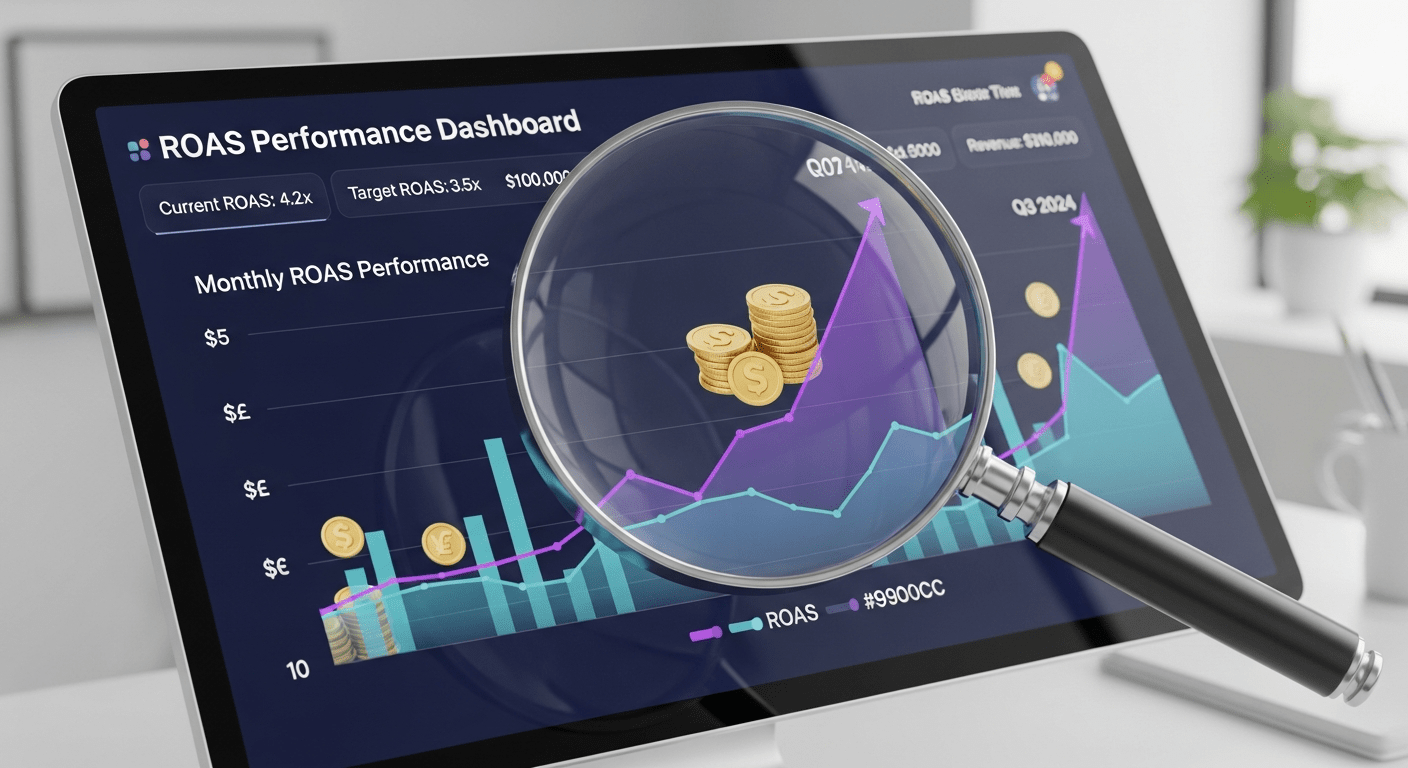
- Return on Ad Spend (ROAS): This is the king of all metrics. It answers a simple question: for every dollar I put into ads, how many dollars did I get back out? If your ROAS is 4x, it means you made $4 for every $1 you spent. A good ROAS is generally considered to be in the 3x to 8x range, depending on your business and industry. If your agency can’t show you this number, that’s a huge red flag.
- Cost Per Acquisition (CPA): This is the other side of the ROAS coin. It tells you exactly how much it costs you, on average, to get one new customer or one new qualified lead from your ads. If your product costs $200 and your CPA is $50, you’re in a good spot. But if your CPA is $190, you’re barely breaking even. Knowing your CPA helps you understand if your campaigns are truly profitable.
There are other numbers in the report, for sure. Things like Click-Through Rate (CTR) and Quality Score are important health indicators. A high CTR means your ad copy is compelling, and a good Quality Score means Google thinks your ads are relevant, which can lower your costs. But they are secondary. They help diagnose why your ROAS or CPA might be low, but they don’t tell the whole story on their own. If you want to learn more about how paid advertising campaigns are structured, that’s a good place to start.
And what about social media ads? The same rules apply. Forget about likes and comments for a minute. Are those ads getting people to click on your website? Are they filling out lead forms? Are they buying your products? The goal is the same: turn ad spend into real business results. Your agency should be able to connect the dots between a Facebook ad and a new customer.
Step 5: Beyond the Numbers – Assessing Communication, Strategy, and Partnership
The reports can look great. The graphs can all point up. But what does your gut tell you? How does it actually feel to work with your agency? This part of how you evaluate a digital marketing agency is just as important as any spreadsheet. A great client-agency relationship is what turns a few good months into real, long-term growth.
Think about how they talk to you. Are they proactive, sending you updates and insights before you have to ask for them? Or are you always the one chasing them down? A true partner explains the ‘why’ behind their strategy. They don’t just send a report; they walk you through it and connect the dots back to your business goals. And if something goes wrong, they own it. They don’t make excuses. This stuff really matters. Poor communication and a lack of truly understanding the business are some of the biggest reasons agencies get fired.
Here’s the real test. Is your agency just an order-taker, or are they a strategic partner? An order-taker does what you ask. A partner understands your business so well that they bring you new ideas you haven’t even thought of yet. They challenge you, in a good way, and are always looking for new opportunities to help you grow. They’re not just trying to keep your monthly retainer; they’re genuinely invested in your success.
Keep an eye out for these warning signs. They often show up long before the numbers start to dip.
- They go quiet. If you have to send three emails to get a simple answer, that’s a problem.
- The team keeps changing. It’s hard to build a partnership when you’re talking to a new person every other month.
- They get defensive. When you ask questions about performance, a good partner welcomes the conversation. A bad one gets touchy or blames other factors without offering any solutions.
If you’re seeing these signs, it’s time for a serious talk. A strong partnership is the engine that drives all the successful numbers we’ve talked about.
Step 6: Taking Action – How to Have a Constructive Performance Conversation
Okay, so the numbers aren’t what you hoped for. Or maybe communication just feels…off. Now comes the part a lot of people dread: having the talk. But this doesn’t have to be a confrontation. Think of it as a course correction. It’s a chance to turn a bumpy ride into a smooth one.
A good agency partner, like us at Potens Digital, will welcome this conversation. It shows you’re engaged and want to make the partnership work. So, how do you do it without making things awkward? You come prepared.
First, gather your notes. Look back at the goals you set in Step 1 and the reports you reviewed. Pinpoint exactly where things are falling short. Is it the Cost Per Acquisition on your Facebook ads? Is organic traffic flat when you expected growth?
Once you have your facts, schedule a meeting. Then, instead of starting with accusations, start with questions. Try these on for size:
- “Can you walk me through what you’re seeing in the data for this campaign? I want to make sure I understand it from your perspective.”
- “What do you think is the biggest roadblock we’re hitting right now?”
- “Based on these results, what would you suggest we change in the strategy for next month?”
This opens the door for problem-solving, not blaming. If things are still off track after the talk, it’s time to create a performance improvement plan together. This isn’t as scary as it sounds. It’s just a simple roadmap to get back on course. The best approach is to be specific and focus on actions, not just feelings. A good plan might look something like this:
- 30-Day Goal: Identify the top 3 underperforming ad sets and launch new creative variations to test against them. We will have a check-in call in two weeks to review early data.
- 60-Day Goal: Based on the 30-day test, reallocate 25% of the ad budget to the winning variations and pause the losers. The goal is to lower the overall CPA by 15%.
- 90-Day Goal: Review the full 90-day performance. If the CPA target is met, we continue with the new strategy. If not, we have another conversation about next steps.
This kind of structured feedback is way more helpful than just saying “I’m not happy.” It creates a clear path forward and makes everyone accountable. Using a framework like this helps build trust and focuses on finding solutions together, which is exactly what a strong client-agency relationship needs to thrive.

Transforming Your Agency Relationship from a Cost into a Growth Engine
So, that’s the roadmap. It’s not about being a watchdog over your agency; it’s about being an engaged partner. When you boil it all down, it comes back to a few simple ideas. Start with clear goals. Focus on the numbers that matter to your bottom line, not just the flashy ones. And understand how each piece, from SEO to paid ads, is contributing to the bigger picture.
Remember that gut feeling we talked about? The quality of your partnership is a real metric. A marketing agency shouldn’t just be another line item on your budget. They should be your growth engine. And the data backs this up; companies with mature, strong partnerships have been shown to grow revenue nearly twice as fast as those without them.
You hired a digital marketing agency to get results. Now you have the tools to make sure that happens. Use this guide to ask smart questions, have productive conversations, and build a relationship that truly moves the needle for your business. You’re in charge of your investment. Make it count.

