

A traveller searches “hotels in downtown Toronto” or “Niagara Falls hotel with parking,” compares the options, and starts narrowing down where to stay. If your hotel is not among those results, you may lose the booking before that traveller ever reaches your website.
Strong hotel SEO can change that. It helps your hotel appear for relevant searches when travellers are actively deciding where to stay, bringing more qualified visitors to your website and creating more opportunities for direct bookings instead of sending them to an Online Travel Agency.google
This is where Potens Digital helps hospitality brands turn search visibility into more booking opportunities. By targeting high-intent searches, strengthening your hotel’s presence in search results, and making your website easier for travellers to discover and trust, SEO can bring more potential guests directly to your business.
From keyword research and Google Business Profile optimization to local SEO, content optimization, technical SEO strategy, and performance tracking, each element can help your hotel attract more relevant traffic, build credibility, and turn more searches into direct reservations.
How SEO Helps Hotels Win More Direct Bookings
- You reach travellers who are ready to book. Organic search catches people already comparing accommodation, so they convert better than cold audiences.
- You keep more of every booking. OTA commissions generally range from 15% to 25%. A direct booking skips that fee.
- You show up where guests look. A well-optimized Google Business Profile helps you appear on Google Maps and in the Map Pack when someone searches “hotels near me.”
- You build authority. Dedicated pages for hotel rooms, amenities, and nearby attractions show Google (and guests) that you know your destination.
- You stay competitive with alternatives. Furnished short-term rentals in Toronto and other big cities now compete for the same travellers, so your site needs to explain clearly why a hotel stay is worth choosing.
- You prepare for AI search. Optimizing for tools like Google AI Overviews keeps you visible as travellers change how they research.
How the Canadian Hotel Market Works
Canada’s hotel market is large, active, and highly competitive. For hotel owners, that means attracting guests is not only about offering a good stay. It is also about being visible when travellers start searching. Here’s what the Canadian market tells us about the opportunity.
- The market is large and competitive. IBISWorld estimates the Canadian Hotels & Motels industry will reach $32.0 billion in 2026, with 6,676 businesses competing for travellers. With so many properties targeting the same audiences, strong online visibility can make a meaningful difference in who gets discovered first.
- Independent hotels have plenty of room to compete. Horwath HTL’s 2026 report shows independent hotels account for 72% of Canadian properties, while branded hotels represent 55% of total room supply. For independent owners, SEO services in Canada offer an opportunity to compete for valuable searches without relying solely on brand recognition.
- Location can shape the competition. About 84% of Canada’s hotel rooms are concentrated in Ontario, British Columbia, Alberta, and Québec. In major markets such as Toronto, Vancouver, Calgary, and Montréal, location-specific searches can be highly competitive, making Local SEO and precise keyword targeting especially important.
- Timing matters too. Search behaviour follows the travel calendar. Ski destinations see stronger demand in winter, lakeside resorts in summer, and city hotels around conferences, festivals, and major events. Travellers often research well before they arrive, so your SEO content needs to capture that interest before peak demand begins.
What Is Search Engine Optimization for Hotels?
When travellers search for a place to stay, your hotel needs to appear at the right moment, answer their questions, and give them a reason to choose you. Hotel SEO in Canada is the process of improving your online presence so travellers who are actively looking for accommodation can find, trust, and consider your hotel. It brings together:
- On-page SEO for room pages, amenity pages, offers, and landing pages
- Local SEO for map and “near me” searches
- Technical SEO for speed, mobile usability, and crawlability
- Content marketing that answers real trip-planning questions
- Reputation and link building that signal credibility
| Paid ads stop the moment your budget does! Hotel SEO marketing is different: Strong rankings, reviews, and content keep attracting guests over time. |
Why SEO Matters for Hotel Businesses
SEO can influence more than where your hotel appears in search results. It can give you useful insight into what travellers want, support other marketing efforts, and help your hotel build a stronger digital presence over time.
You Learn What Travellers Are Searching For
Search behaviour can reveal what potential guests care about before they contact your hotel. Searches for pet-friendly rooms, airport hotels, family accommodation, parking, breakfast, spa services, or specific neighbourhoods can show what travellers want from their stay.
These insights can help shape your website copy, packages, landing pages, promotions, and guest offers around actual search demand.
You Can Make Better Marketing Decisions
SEO data can show which topics, locations, services, and pages attract the most interest. Instead of relying entirely on assumptions, hotel owners can use this information to decide where to focus their marketing efforts.
The same insights can support paid advertising, social media, email campaigns, and other channels, helping keep your messaging consistent.
You Can Reach Travellers Earlier
Not every traveller starts with a hotel name. Someone might search for things to do in Vancouver, hotels near a convention centre, or the best area to stay in Toronto before they ever compare specific properties.
Useful content can introduce your hotel to these travellers earlier in their research and give them another reason to consider your business when they are ready to choose accommodation.
Your Website Becomes a Long-Term Marketing Asset
Every useful page you create adds more substance to your hotel’s online presence. Room information, amenity details, destination content, FAQs, and other resources can continue attracting relevant searches after they are published.
Over time, your website can become a stronger source of qualified traffic and a more useful resource for travellers planning their stay.
Keyword Research for Hotels
Travellers use different searches as they move from researching a destination to choosing where to stay. Someone searching “things to do in Banff” is still planning a trip, while “hotel with free parking near Banff” shows a much clearer accommodation need. Your keyword strategy should account for these differences and target searches that match your hotel, location, and the guests you want to attract.
The Keywords Your Hotel Should Target
Hotel searches can reveal what matters most to potential guests, from location and price to amenities, nearby attractions, and the type of stay they want:
- Location and property type: hotel in Mississauga, boutique hotel Montréal, luxury hotel Vancouver, resort near Whistler
- Price and positioning: budget hotel near Toronto airport, affordable family accommodation Calgary
- Amenities and features: pet-friendly hotel Ottawa, hotel with indoor pool Niagara Falls, hotel with free parking downtown
- Landmarks and events: hotels near Rogers Centre, accommodation near Banff National Park, hotels near Calgary Stampede
- Booking-focused searches: book hotel direct, best hotel rates in Toronto, hotel deals Vancouver
- Alternative accommodation: furnished short-term rentals Toronto, extended-stay suites Vancouver, serviced apartments Montréal
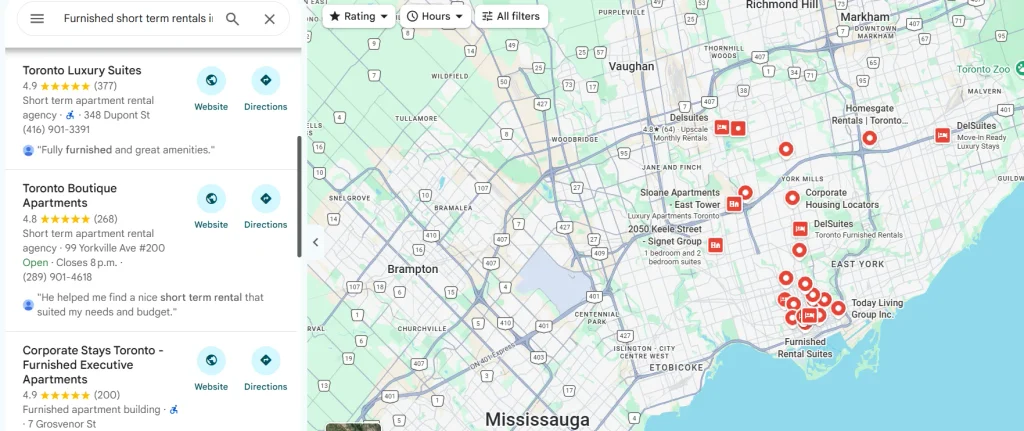
Alternative accommodation deserves attention because travellers may compare a hotel with a furnished rental, serviced apartment, or extended-stay property before booking. If your hotel offers suites, kitchenettes, longer stays, or similar features, create content that addresses those needs and clearly explains the differences
Match Keywords to Search Intent
The same traveller can use very different searches depending on how far along they are in their booking journey. A broad destination search calls for useful planning content, while a specific hotel or booking search should lead to a page that helps the traveller book.
| Search Intent | Example Keyword | Traveller Goal | Suitable Content |
| Transactional | boutique hotel Quebec City book direct | Ready to book | Booking or room page |
| Commercial | best luxury hotel Vancouver for couples | Comparing options | Landing page |
| Comparison | hotel vs furnished short-term rentals Toronto | Choosing accommodation | Comparison guide |
| Informational | things to do in Banff in winter | Planning a trip | Destination guide |
| Branded | [Hotel Name] rooms and rates | Looking for your hotel | Homepage or room page |
Branded searches deserve particular attention. Someone searching your hotel by name is already familiar with your business and may be close to booking. Make sure they can easily reach your official website, see your rooms and rates, and move from search to reservation without unnecessary friction.
The goal is not to collect hundreds of keywords. Build a focused list around your location, property, amenities, guest types, and the searches that can bring qualified travellers to your hotel.
Google Business Profile and Google Maps
For many travellers, your Google Business Profile (GBP) is your first impression. It shows up in the Map Pack, on Google Maps, and next to branded searches, often before your website does.
How to Optimize Your Profile
- Pick the right primary category. Choose “Hotel,” “Resort,” or “Bed & Breakfast” if that fits better. Add secondary categories like “Event Venue” where relevant.
- Fill in every field. Description, hours, check-in details, phone, website. Link straight to your booking page, not just your homepage.
- List your hotel amenities. Wi-Fi, parking, breakfast, pool, accessibility, EV charging, pet policy. Travellers filter on these.
- Upload original photos. Show hotel rooms, the lobby, dining, the exterior, and the view. Add new ones often.
- Use Posts and Q&A. Share seasonal packages, local events, and answers to questions about parking or airport transfers.
- Keep your NAP consistent. Name, Address, and Phone must match everywhere.
- Link your direct booking button wherever Google allows.
- Check in weekly. Treat the profile as a living channel, not a one-time setup.
Google Maps is also where guests decide which hotel is convenient: close to the convention centre, the ferry, the ski lift, the hospital. A complete, well-reviewed profile makes that choice easy.

Your Digital Growth Partner
Get Your Hotel Found on Google Maps
Make your hotel easier to find when travellers search nearby. Potens Digital optimizes your Google Business Profile to improve local visibility and attract more guests ready to book.

Google Business Profile Mistakes That Can Cost You Bookings
- Choosing a vague or incorrect category
- Listing a call centre number instead of the property’s direct line
- Leaving guest reviews unanswered for weeks
- Using only stock or outdated pre-renovation photos
- Sending travellers to a generic website page instead of a clear booking path
These issues can weaken your hotel’s local search presence and make it harder for travellers to compare your property and complete a booking.
Turn Local Hotel Searches Into Booking Opportunities
Local SEO helps your hotel appear when travellers search for accommodation in a specific destination, neighbourhood, or area. For hotels, local visibility goes well beyond your street address. Travellers may search for a hotel near an airport, convention centre, attraction, business district, or popular neighbourhood.
- Create useful neighbourhood content. Publish pages around relevant areas and travel needs, such as “Where to Stay Near the Toronto Waterfront” or “A Weekend in Prince Edward County.”
- Give travellers real distances. “A seven-minute walk to the convention centre” gives visitors more useful information than simply saying “centrally located.”
- Make your location easy to understand. Add Google Maps and explain nearby transit, parking, attractions, restaurants, and major venues.
- Keep local listings accurate. Maintain consistent hotel information across Google Business Profile, tourism websites, directories, and mapping platforms.
- Build genuine local relationships. Partnerships with restaurants, tour operators, venues, tourism organizations, and nearby businesses can create useful referrals and relevant website links.
Help Travellers Choose the Right Room
When travellers visit your hotel website, they want to know exactly what they are getting before they book. Give each important room or suite enough space to explain its features, amenities, photos, rates, and booking options.
For example, a hotel may have separate pages for Deluxe King Rooms, Family Suites, Executive Suites, or Accessible Rooms. Each page should focus on that accommodation and give visitors the information they need to compare options and book.
Just Like the Example Below:
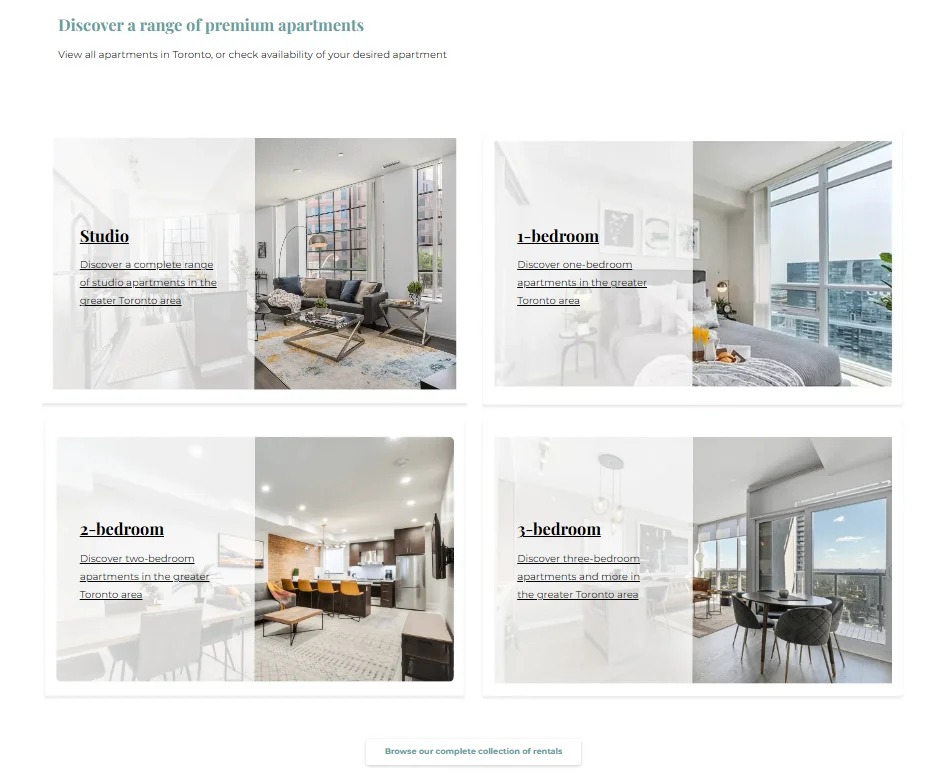
What to Include on Each Accommodation Page
- A clear title and H1 that identify the room type, hotel, and location, such as “Deluxe King Room at [Hotel Name] in Downtown Ottawa”
- Original photos and videos showing the actual room and its features
- Key details such as room size, bed configuration, views, accessibility features, and in-room amenities
- Rates and availability where applicable, with an easy way to check booking options
- A prominent booking button that is easy to access on desktop and mobile
- Direct-booking benefits such as breakfast, parking credits, or flexible cancellation when genuinely offered
- Clear policies and fees so guests know what to expect before completing their reservation
Use the same approach for other important hotel offerings. Dining, spa services, meeting spaces, and wedding and event packages can each have dedicated pages that explain what is available, answer common questions, and give visitors a clear next step.
Match Your SEO to the Hotel You Actually Operate
The fundamentals of SEO apply across the hospitality industry, but the searches and information that matter can vary significantly by property type. A luxury hotel, boutique property, budget hotel, and resort should not all use the same content strategy.
Luxury Hotel SEO
Luxury travellers may research the overall experience as much as the room itself. Build content around design, dining, spa and wellness, distinctive amenities, views, personalized services, and unique local experiences.
High-quality photography and video can help communicate details that are difficult to capture through text alone. Brand visibility also matters, as travellers may search for the hotel by name before booking.
Boutique Hotel SEO
Boutique hotels can use their personality, design, history, and neighbourhood as important search themes. Explain what makes the property different and what guests can experience nearby.
Content could target searches such as “romantic boutique hotel in Prince Edward County” while also covering local attractions, restaurants, events, and experiences relevant to your ideal guests.
Budget Hotel SEO
Budget hotels should make practical information easy to compare. Highlight features such as parking, breakfast, public transit, airport access, room facilities, cancellation terms, and other included amenities.
Clear pricing information and a simple booking experience can also help visitors quickly understand what they are getting for their stay.
Resort SEO
Resorts often sell an entire stay, not just a place to sleep. Build dedicated content around golf, skiing, beaches, spa services, family activities, weddings, dining, and seasonal experiences.
Plan seasonal content and packages ahead of peak demand so travellers have time to discover and consider your property while planning their trip.
Compete for Travellers Comparing Hotels and Furnished Rentals
Hotels are not only competing with other hotels. Travellers planning longer stays, family visits, business trips, or relocations may also compare hotels with furnished short-term rentals and serviced apartments. These searches can reveal what the traveller values, whether that is more space, kitchen facilities, flexibility, location, or longer-stay options.
Your website can address those needs without trying to imitate rental platforms.
Show How Your Hotel Fits Different Types of Stays
- Explain the practical differences. A useful comparison can cover housekeeping, cancellation policies, front-desk support, amenities, accessibility, and other relevant factors.
- Highlight your actual hotel advantages. If your property offers 24-hour assistance, professional housekeeping, on-site facilities, secure access, or accessible rooms, make those features easy to find.
- Promote extended-stay options. If you offer suites, kitchenettes, laundry facilities, workspaces, or weekly and monthly rates, give these features dedicated visibility.
- Target longer-stay searches naturally. Mention extended stays and apartment-style features where they genuinely apply to your rooms.
- Answer questions about costs and policies. Clear information about fees, deposits, parking, housekeeping, and cancellation terms can make the booking process easier.
Give Every Hotel Location Its Own Search Presence
Hotel groups with multiple properties should give each location its own dedicated page. A useful location page should explain what makes that particular hotel relevant to travellers visiting the area.
- Create original content for every property. Cover its neighbourhood, nearby attractions, transportation, amenities, and guest experience.
- Use property-specific information. Include genuine photographs, amenities, awards, and other details that actually apply to that location.
- Connect each page to the correct Google Business Profile. Make it easy for visitors to move between local search and the official hotel website.
- Maintain a consistent structure without copying the copy. A common page framework makes multiple properties easier to manage, while the information should remain unique to each hotel.
For Example:
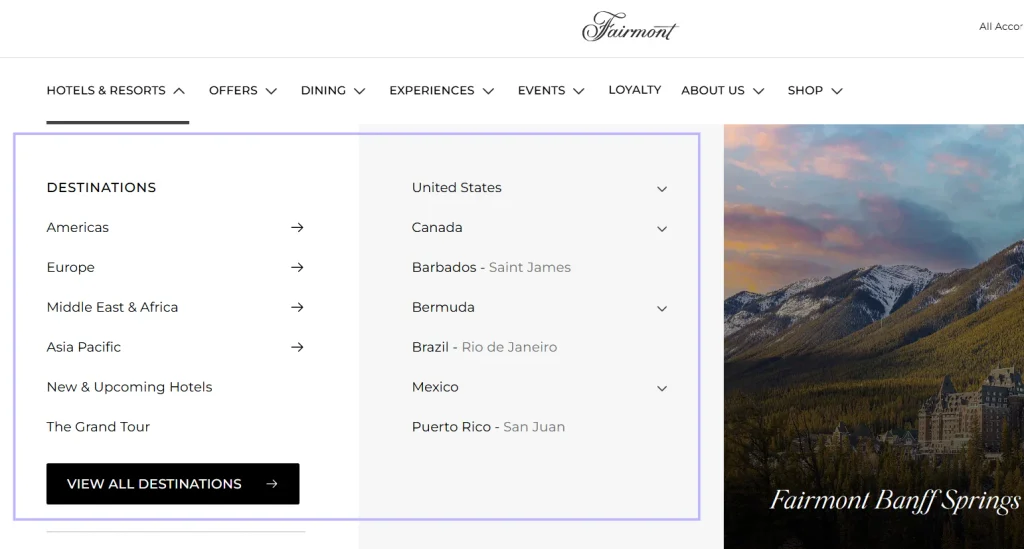
This structure gives hotel groups a scalable way to manage SEO without creating a collection of near-identical location pages.
Create SEO Optimized Hotel Content Travellers Actually Need
Hotel content can reach travellers before they are ready to choose a property. The most useful topics answer questions about the destination, the trip, and the type of stay the traveller is planning.
Build Content Around Real Travel Decisions
Useful topics can include:
- Destination guides: “A Weekend in Halifax: Where to Stay, Eat, and Explore”
- Seasonal itineraries: “Winter in Mont-Tremblant: A Family Planning Guide”
- Event content: “Where to Stay During the Calgary Stampede”
- Accommodation comparisons: “Resort vs. Boutique Hotel: Which Suits Your Trip?”
- Practical advice: “What to Pack for a Canadian Winter Getaway”
- Business travel: “Where to Stay Near Toronto’s Financial District During Conference Week”
- Local experiences: “Recommendations from your concierge, chefs, event team, or other staff”
The strongest hotel content includes information grounded in genuine local knowledge. Original photography, practical recommendations, and first-hand property information can make your content more useful than a generic destination article.
Build Related Content Around One Topic
Instead of publishing unrelated posts, group content around destinations, traveller types, and experiences. A Niagara Falls hotel, for example, could build a connected group of pages covering a weekend itinerary, family activities, winery tours, winter attractions, nearby restaurants, and accommodation options. Link these pages naturally so visitors can move from trip planning to relevant hotel information.
Use Video to Show the Experience
Short room tours, amenity walkthroughs, event-space previews, and neighbourhood videos can help travellers understand what they will actually experience.
Add descriptive text around videos and keep the information consistent with the written content on your website. You can then use videos across relevant website pages, Google Business Profile content, and social channels.
Build a Hotel Website That Is Easy to Navigate
A clear site structure helps visitors find important information while giving search engines a better understanding of how your pages relate to one another.
- Connect informational and commercial pages. Link destination guides to relevant room, package, and offer pages using descriptive anchor text.
- Use breadcrumbs. They can help visitors understand where they are within larger websites.
- Link related services naturally. A wedding guide can link to your event venue page, while a business travel guide can point visitors toward relevant room and meeting options.
- Keep important pages easy to reach. Don’t bury key room, service, location, and booking pages several levels deep.
Review your site for pages targeting nearly identical searches. When multiple pages compete for the same intent, it can become harder to determine which page should rank.
Fix the Technical SEO Issues That Can Get in the Way
A hotel website can have excellent content and still provide a poor experience if pages are slow, difficult to navigate, or inaccessible to search engines. Technical SEO supports the site’s performance, accessibility, and discoverability.
| Technical Area | What to Check | Why It Matters |
| Core Web Vitals | LCP, INP, and CLS meet recommended thresholds | Supports a faster, more stable experience |
| HTTPS | Valid security certificate across the site | Protects visitors and supports secure transactions |
| Mobile usability | Touch-friendly navigation, forms, date pickers, and CTAs | Many travellers research and book on mobile devices |
| XML sitemap and robots.txt | Important pages are discoverable and not accidentally blocked | Helps search engines crawl the site properly |
| Canonical URLs | Preferred versions are clearly defined | Helps manage duplicate or similar URLs |
| Structured data | Relevant hotel and page information is marked up correctly | Helps search engines understand page content |
Fix the Technical Issues That Can Disrupt Hotel Bookings
- Improve page speed. Hotel websites often contain large images, booking tools, tracking scripts, and other elements that can slow pages down.
- Review the booking engine. It should work properly on mobile, load reliably, and provide a consistent experience from the hotel website through checkout.
- Monitor crawl and indexing issues. Use Google Search Console to identify problems affecting important pages.
- Improve accessibility. Readable text, sufficient contrast, descriptive alternative text, and keyboard-friendly navigation make the website easier for more visitors to use.
- Support multiple languages correctly. Hotels serving bilingual markets should use properly implemented language versions and relevant technical tags.
- Protect visitor information. Review consent notices, forms, analytics, and other data-handling practices against applicable Canadian requirements.
Use Guest Reviews as Feedback, Not Just a Rating
Reviews influence how potential guests perceive a hotel, while the feedback itself can reveal areas where the guest experience could improve. Avoid treating reviews as a substitute for broader SEO work.
- Ask after the stay. Send review requests at an appropriate point after checkout.
- Make the process easy. Provide a clear route to the relevant review platform.
- Respond professionally. Thank guests for useful feedback and address concerns without becoming defensive.
- Use natural language. Mentioning the property and relevant details in a genuine response is fine. Keyword-stuffed replies are not.
- Monitor recurring feedback. Repeated comments about noise, check-in delays, breakfast, or room facilities can identify areas worth improving.
- Keep your business information accurate. Consistent details across your website and local profiles make it easier for travellers to verify the hotel they are considering.
The goal is not simply to collect more reviews. It is to use guest feedback to improve the experience and provide clearer information to future visitors.
Show the First-Hand Experience Behind Your Hotel
Experience, expertise, authoritativeness, and trust are important concepts in how Google evaluates content. For hotels, one of the clearest ways to show first-hand knowledge is to publish information that comes directly from the property and its team.
- Use original photographs and videos that show the real hotel.
- Share staff knowledge when it adds useful information, such as recommendations from a concierge or insights from a chef.
- Display relevant credentials such as certifications, accessibility information, awards, or recognized ratings where applicable.
- Be transparent about policies and fees rather than leaving important information until checkout.
- Keep information current. Update seasonal pages, amenities, opening hours, event information, and destination recommendations when details change.
| Generic content can describe almost any hotel. First-hand information tells travellers what they can expect from your hotel. |
Help Search Engines Understand Your Hotel
Structured data gives search engines additional information about the content and entities represented on a page. For hotel websites, relevant structured data may describe the lodging business, local business information, offers, events, or FAQs where applicable.
Use only structured data that accurately represents visible and relevant information on the page. Validate the markup after implementation and review it when page content changes.
Schema is not a shortcut to higher rankings or guaranteed rich results. Its value comes from helping search engines interpret information about your property more clearly.
Prepare Your Hotel Content for AI Search
Travellers are increasingly using conversational queries to research destinations, accommodation, and activities. Instead of searching only for “hotels in Montréal,” someone may ask, “Which hotels near Old Montréal allow dogs and offer parking?”
Your content should be able to answer questions like these clearly.
- Answer the question directly. Put the most useful information near the beginning of the relevant section.
- Use natural language. Write FAQs and headings around the way travellers actually ask questions.
- Keep hotel information consistent. Your website, Google Business Profile, and other important listings should not contradict one another.
- Publish original information. First-hand details about your property, neighbourhood, amenities, and guest experience give your website information that generic sources may not provide.
AI search is still evolving, so avoid building your strategy around promises of guaranteed citations. Focus on creating accurate, useful, original content that can be understood by both travellers and search systems.
Combine SEO With Paid Hotel Marketing
Organic search does not have to operate separately from paid campaigns. Hotels can use different channels for different booking goals, seasons, and traveller segments.
- Metasearch can place your direct hotel rate alongside rates from booking platforms, giving travellers another route to your website.
- Brand campaigns can help maintain visibility when travellers search specifically for your hotel.
- Paid search can support high-priority offers, destinations, events, and seasonal demand.
- Remarketing can reconnect with visitors who viewed rooms or offers without completing a reservation.
The right mix depends on your property, market, booking goals, and budget. Paid campaigns can support immediate priorities while organic search continues building visibility across the website.
Build Local Citations and Relevant Links
Accurate business information across important platforms makes it easier for travellers to verify your hotel and find the correct website, phone number, address, and other details.
Keep Important Hotel Listings Accurate
Prioritize relevant sources such as:
- Google Business Profile and major mapping platforms
- Provincial and local tourism organizations
- Chambers of commerce and business associations
- Hospitality and travel directories
- Event venues and destination websites
- Relevant local publications
Earn Links Through Real Local Relationships
Hotels can build relevant connections with tourism organizations, event venues, tour operators, wedding planners, attractions, and nearby businesses.
You can also create resources that other websites may genuinely want to reference, such as local travel guides, event calendars, neighbourhood maps, seasonal planning resources, or original destination research.
Focus on relevance and usefulness, not collecting as many links or directory listings as possible.
Analyze the Search Results Your Guests See
Your real search competitors may include other hotels, OTAs, furnished rental platforms, travel websites, destination guides, and local publications.
Review important searches regularly to understand:
- Which websites consistently appear?
- What type of page is ranking?
- What questions does the ranking content answer?
- What information is missing or difficult to find?
- How easy is the page to use on mobile?
- How quickly can a visitor reach booking information?
- Which local websites are linking to competing properties?
Competitor research should help you identify opportunities, not encourage you to copy another property’s content.
Connect SEO Performance to Hotel Revenue
Traffic is useful, but it does not tell the full story. Measure hotel SEO against actions that matter to the property.
Track the Actions That Matter
Monitor metrics such as:
- Organic visits to important room, service, and location pages
- Booking starts and completed reservations
- Google Business Profile interactions
- Search impressions and clicks
- Calls and enquiries
- Booking value by acquisition source
- Performance of branded and non-branded searches
Improve the Journey From Search to Booking
Use this data to identify where visitors may drop off. Review room information, rates, policies, calls to action, booking forms, mobile usability, and other points where visitors may hesitate.
Test changes to page layouts, booking buttons, offers, and supporting information where appropriate. The goal is to make it easier for a qualified visitor to move from search to reservation.
Turn First-Time Guests Into Repeat Direct Bookings
SEO can help bring a traveller to your website, but the relationship can continue after the stay. With appropriate consent, hotels can use email and other communication channels to encourage future direct bookings.
- Offer relevant return incentives. Member rates, seasonal offers, or other benefits can encourage guests to book directly again.
- Segment communications. Business travellers, families, couples, and event guests may have different reasons to return.
- Share relevant updates. New amenities, seasonal experiences, packages, and local events can give previous guests a reason to revisit.
- Invite guests back. Keep post-stay communication useful and appropriately timed rather than sending the same message to everyone.
The objective is to build a stronger direct relationship with guests over time, not simply send more promotional emails.
Avoid These Common Hotel SEO Mistakes
1. Using one page for everything
A homepage cannot provide the detail travellers need about every room, service, location, and experience.
2. Copying generic hotel descriptions
If the same description could apply to dozens of properties, it does little to explain what makes your hotel relevant.
3. Ignoring mobile booking
Room pages and booking tools need to work properly on the devices travellers actually use.
4. Leaving your Google Business Profile unattended
Incorrect information, outdated photographs, or missing details can create unnecessary confusion.
5. Hiding important costs and policies
Guests should understand relevant fees, deposits, cancellation terms, and parking costs before they reach the final booking step.
6. Publishing generic destination content
A post that could have been written by any hotel in Canada is unlikely to demonstrate much local knowledge.
7. Measuring traffic without measuring reservations
SEO reporting should connect search performance with enquiries, booking activity, and other meaningful business outcomes.
8. Treating SEO as a one-time task
Search results, competitors, hotel offerings, content, and technical requirements change. Your strategy needs regular review.
How Long Does Hotel SEO Take to Work?
Hotel SEO doesn’t follow a fixed timeline. Results depend on the property’s existing visibility, website condition, competition, content quality, technical issues, and consistency of the work.
A Practical 90-Day Starting Plan
Days 1–30: Audit the website, search performance, Google Business Profile, technical setup, existing content, and priority search opportunities.
Days 31–60: Improve important room and service pages, address technical issues, strengthen local information, and publish the first targeted content.
Days 61–90: Expand useful content, develop relevant local relationships, monitor performance, and identify areas for further optimization.
Early improvements may appear at different stages, but meaningful SEO evaluation should focus on trends over time rather than a promise of a specific ranking or booking increase.
What to Expect When Budgeting for Hotel SEO
Hotel SEO costs vary based on your property’s size, website, market, and goals. A small independent hotel may need a focused SEO project, while a resort or multi-property group may require ongoing support across multiple locations and pages.
Your SEO budget may depend on:
- Number of properties: Multiple locations require separate local SEO, landing pages, listings, and tracking.
- Website size and condition: Larger websites or sites with technical issues may require more extensive optimization.
- Market competition: Competitive destinations may require more content, local SEO, and authority-building work.
- Number of pages: Room types, suites, amenities, services, locations, and packages may each need optimization.
- Content needs: Destination guides, seasonal content, landing pages, and other resources can increase the scope.
- Ongoing support: Monthly SEO may include performance monitoring, technical improvements, content updates, keyword research, and strategy adjustments.
Some hotels may only need a one-time project to address key website and SEO issues, while others benefit from ongoing support as their search presence grows.
When comparing proposals, look at what the service includes rather than price alone. Consider the pages being optimized, technical work, content, reporting, and how results will be measured. Useful metrics include qualified organic traffic, enquiries, booking starts, direct reservations, and website-generated revenue.
How to Choose the Right Hotel SEO Agency in Canada
A hotel SEO agency in Canada should understand more than keywords and rankings. Hospitality websites have specific requirements around room pages, booking engines, seasonality, local search, destination content, and direct reservations.
Look for an agency with experience in:
- Hospitality SEO and hotel websites
- Local SEO and Google Business Profile optimization
- Technical SEO and website performance
- Content strategy based on search intent
- Conversion optimization for booking journeys
- Multi-location SEO for hotel groups
- Clear reporting connected to meaningful business outcomes
Be cautious about guaranteed rankings or promises of instant results. A credible agency should be able to explain what it will change, why those changes matter, and how it will measure progress.
Your Digital Growth Partner
Choose Potens Digital for Hotel SEO
Get a hotel SEO strategy focused on higher rankings, stronger search visibility, and more direct bookings. Potens Digital helps hotels improve their presence across Google, local search, and key booking searches.

Hotel SEO Checklist for More Direct Bookings
Use this checklist to review your hotel’s search visibility, website experience, and booking journey:
- Google Business Profile: Claim, verify, and accurately categorize your hotel. Keep your address, contact details, hours, photos, and other key information up to date.
- Local listings: Keep your hotel information consistent across tourism websites, directories, maps, and other relevant platforms.
- Accommodation pages: Create dedicated pages for important room types and suites, with useful details, photos, amenities, rates, and booking options.
- Location content: Explain your hotel’s proximity to airports, attractions, business districts, transit, venues, and other relevant destinations.
- Keyword targeting: Build your search strategy around location, amenities, property type, guest needs, and travel intent.
- Travel content: Publish useful destination guides, itineraries, event information, and answers to questions travellers ask before booking.
- Mobile experience: Make sure your website and booking engine work smoothly across phones, tablets, and desktops.
- Technical SEO: Check page speed, crawlability, indexing, internal links, HTTPS, XML sitemaps, and other technical fundamentals.
- Structured data: Add relevant schema markup and validate it to help search engines understand your hotel and its pages.
- Booking information: Make room rates, amenities, policies, fees, availability, and cancellation conditions easy to understand.
- Guest feedback: Make it easy for guests to leave reviews and respond to feedback professionally and consistently.
- Visual content: Use original, high-quality photos and videos that show your rooms, amenities, property, and surrounding area.
- Local links: Build relevant relationships with tourism organizations, venues, restaurants, attractions, and other local businesses.
- Conversion tracking: Track website enquiries, calls, booking activity, and other actions that show how organic visitors engage with your hotel.
- Search performance: Monitor branded and non-branded searches, important landing pages, organic traffic, and booking-related conversions.
Frequently Asked Questions
Why does hotel SEO need a strong local strategy?
Hotels are location-dependent businesses, so many valuable searches include a destination, neighbourhood, attraction, venue, or travel need. Local SEO helps connect the property with those searches while making important location details easier for travellers to understand.
What hotel pages should be prioritized for SEO?
Start with pages that directly support important traveller decisions, such as room types, locations, amenities, packages, dining, meetings, weddings, and other services that generate bookings or enquiries. These pages should contain specific information rather than generic descriptions.
How can hotels attract more business travellers through search?
Create content around business guests’ needs, such as hotels near convention centres, airport access, parking, meeting facilities, workspace, and nearby business districts. Dedicated business travel pages can also connect these topics with relevant room and meeting options.
How can a hotel improve visibility for “near me” searches?
Maintain an accurate Google Business Profile, keep local business information consistent, provide clear location details on the website, and publish useful content around nearby attractions, neighbourhoods, venues, and travel needs.
Can hotel SEO in Canada support wedding and event bookings?
Yes. Hotels can create dedicated pages for weddings, conferences, meetings, and other events. These pages should explain venue capacity, spaces, amenities, catering, accommodation options, location, and enquiry or booking processes.
How can hotels make their websites more useful for AI search?
Provide accurate, original information that directly answers traveller questions. Clear room details, location information, policies, amenities, local recommendations, and first-hand property information can make the website easier for search systems to interpret.
Grow Your Direct Bookings With Potens Digital
A hotel website needs more than attractive photography and a booking button. It needs a search strategy that connects the property, destination, guest needs, website experience, and booking journey.
Potens Digital Can Support Hotels With
- Hotel SEO services based on search behaviour and business goals
- Local SEO and Google Business Profile optimization
- Technical and on-page SEO
- Content strategy and production
- Hotel website and conversion optimization
- Paid search and broader digital marketing support
Whether you operate an independent boutique hotel, a resort, or multiple properties, the focus is on building useful search visibility and creating more opportunities for travellers to book directly through your website.

